
How low-slung layouts optimize natural air currents
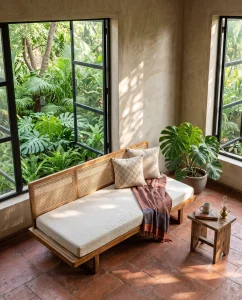
In traditional Indian architecture, air movement is everything. Modern green homes rely on passive cooling strategies, but these plans fail when heavy, high-backed contemporary furniture blocks the path of low-velocity breezes. Standard Western sofas sit high off the ground and present large, solid vertical barriers to air currents. By contrast, traditional Indian seating like the low-slung diwan, the baithak, or the classic webbed charpai keeps the center of gravity low.
When you keep seating close to the floor, you leave the mid-level air path unobstructed. This configuration allows cross-ventilation currents to move freely across the room. A low-profile daybed allows air entering through low windows to sweep across the floor, cooling the occupants directly. If you are designing for hot, humid regions like coastal Maharashtra or Tamil Nadu, this low-lying air movement is much more effective than relying on high-ceiling air circulation alone. You can read more about how we integrate these spatial layouts in our portfolio of sustainable homes across India.
Along with this, low-slung furniture reduces the need for heavy air conditioning. When occupants sit closer to the ground, they are positioned in the cooler zone of the room, as hot air naturally rises toward the ceiling. This physical reality means that even on warm afternoons, a room with low-profile seating feels cooler than one filled with high, upholstered armchairs that trap body heat.
The carbon physics of traditional Indian furniture design
When analyzing the lifecycle carbon of interior spaces, modern furniture is a major offender. Most contemporary pieces are made from medium-density fiberboard (MDF) or particleboard bound with urea-formaldehyde resins, covered in synthetic veneers, and shipped across oceans. When these items break, they cannot be repaired and end up in landfills, off-gassing toxic chemicals for decades.
True traditional Indian furniture design relies on local, durable, bio-based materials that act as carbon sinks. We prioritize reclaimed teak, rosewood, and mango wood sourced from old demolished structures. This wood has already cured for fifty to eighty years, meaning it is incredibly stable and will not warp under seasonal humidity shifts. Coupling these timbers with natural fibers like coir, jute, and cane creates lightweight, high-strength furniture. The carbon footprint of a hand-woven cane chair made from local materials is a fraction of a molded plastic or steel-framed office chair. By using local craftsmanship, we bypass the heavy carbon costs of industrial manufacturing and global shipping. You can explore our sourcing methods and material choices on our reclaimed wood materials guide.
Using reclaimed timber also prevents deforestation. Instead of cutting down living trees to make new furniture, we reclaim wood from old houses, barns, and industrial structures. This wood has a character and density that cannot be replicated by fast-grown plantation timber. The natural weathering process gives it a deep patina, making each piece unique while keeping carbon locked safely inside the wood fibers.
Why wood-to-wood joinery outlasts modern hardware
A major failure point in modern green interiors is the reliance on metal fasteners, concealed hinges, and chemical adhesives. When a metal screw is driven into engineered wood, it creates a high-stress point. Over time, as the humidity rises and falls, the wood and the metal expand and contract at different rates. This movement eventually strips the screw hole, leaving the joint loose and irreparable.
Traditional Indian woodworkers solved this problem by avoiding metal entirely. They used mortise and tenon joinery, dowels, and interlocking lap joints. In these systems, the wood pieces expand and contract in unison. During the monsoon, the wood swells and the joint becomes tighter. During the dry summer, it relaxes slightly without losing structural integrity. A well-crafted wooden swing, or jhoola, relies on these interlocking joints to distribute dynamic loads evenly. By choosing furniture built with these methods, you ensure that your pieces can be disassembled, repaired, and passed down through generations, which is the ultimate goal of circular design.
This approach to joinery also means that the furniture can be easily repaired. If a joint does loosen after decades of use, a skilled carpenter can disassemble the piece, replace a wooden dowel, and reassemble it without damaging the surrounding wood. This is impossible with modern flat-pack furniture, where a single stripped screw hole often means the entire piece must be discarded.
True sustainability is not about buying products with green labels. It is about choosing materials and construction methods that make replacement unnecessary.
Can you achieve healthy indoor air without synthetic sealants?
Many homeowners believe that wood must be sealed with polyurethane to protect it from stains and moisture. However, polyurethane forms a plastic film over the wood, locking in moisture and preventing the natural material from breathing. It also releases volatile organic compounds (VOCs) into your indoor air for months after application. When this plastic layer scratches or peels, the entire piece must be chemically stripped and refinished.
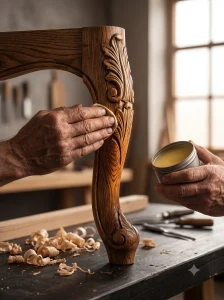
Traditional Indian finishes rely on natural oils, waxes, and resins like shellac, which is derived from natural lac. We treat our custom pieces with a blend of cold-pressed linseed oil and pure beeswax. This mixture penetrates deep into the wood fibers, revealing the natural grain while allowing the wood to transpire. If the surface gets scratched or stained, you do not need to call a specialist with a power sander. You simply clean the area and rub in a fresh coat of wax. This simple maintenance loop keeps the indoor air quality completely free of toxic off-gassing, which is a core requirement for any certified green home.
These natural finishes develop a beautiful patina over time. Rather than looking worn out as it ages, oil-finished solid wood gains depth and character. The minor scratches and dents of daily life become part of the story of the piece, rather than unsightly defects that demand immediate replacement.
Integrating heritage pieces without cluttering modern spaces
A common concern among boutique commercial clients and homeowners is that incorporating traditional elements will make their space look cluttered, heavy, or dated. This concern is valid if you try to squeeze a massive, heavily carved colonial-era wardrobe into a small apartment. The secret lies in selective adaptation and scale transition.
Instead of replicating a historic room, focus on functional archetypes. A single, beautifully carved wooden pillar can be repurposed as a structural support or a free-standing pedestal. A simple wooden chest works as a coffee table while providing hidden storage. By combining these detailed pieces with clean, minimalist walls and lime-plaster finishes, you create a balanced contrast. The simplicity of the modern room draws focus to the craftsmanship of the traditional piece, and the natural warmth of the wood softens the clean lines of the architecture. This approach allows you to build a space that feels calm, functional, and deeply connected to Indian craft traditions.
Another useful strategy is to simplify the ornamentation. You can retain the structural form of a traditional piece, such as the elegant turned legs of a Gujarati table, but omit the heavy surface carving. This clean-lined adaptation preserves the heritage silhouette while matching the clean, uncluttered aesthetic of modern sustainable architecture.
Creating spaces that breathe
When we apply traditional Indian furniture design to modern spaces, we are not looking backward. We are choosing a smarter, cleaner way to build. By utilizing regional materials, low-slung layouts, and chemical-free finishes, we can design spaces that perform better thermally and age with grace. If you want to move away from standardized, high-carbon interiors, consider how these heritage principles can transform your space. Contact Thumbimpressions today to discuss how our bespoke custom furniture design services can bring these sustainable practices into your home.
Design Your Breathable, Sustainable Sanctuary
Ready to transition away from high-carbon, synthetic interiors? At Thumbimpressions, we blend ancient Indian furniture traditions with contemporary, climate-responsive architecture. Let’s collaborate to design custom, low-impact furniture that elevates your home’s natural air currents, health, and heritage.
Frequently asked questions
Does traditional Indian furniture work in small modern apartments?
Yes, if you scale the pieces down and focus on multi-functional items. A low-slung diwan can double as a guest bed, and a carved wooden chest can offer storage while serving as a coffee table, keeping the apartment open and uncluttered.
How do you protect reclaimed wood furniture from termites without using toxic chemicals?
We use natural borate-based treatments and neem oil solutions. These natural compounds protect the wood from insects without releasing harmful VOCs into your indoor living spaces, keeping the air clean and safe.
Why is hand-woven cane preferred over modern synthetic upholstery?
Natural cane allows air to circulate through the seating, reducing heat build-up on warm days. It is also completely biodegradable, lightweight, and sourced locally, making its carbon footprint near zero compared to synthetic foam and fabrics.
Can traditional joinery withstand extreme seasonal climate changes in India?
Yes. All-wood joinery like mortise and tenon allows the wood to expand and contract naturally with humidity changes. Unlike metal screws, which tear the wood fibers over time, wooden joints remain stable and actually tighten during high-humidity seasons.
How does low-slung seating affect room temperature and airflow?
Low-slung seating keeps the mid-level air path clear, allowing cross-ventilation breezes to cool occupants directly. It also positions people in the lower, cooler zone of the room, since hot air naturally rises toward the ceiling.