
The raw reality of timber sourcing in India
Let us look closely at where the wood comes from. In India, the market is flooded with imported timbers like African Afro-Teak or European Oak, which carry massive carbon footprints from shipping alone. Even domestic species like CP Teak or North Indian Sheesham are often harvested through questionable channels despite state-level forestry regulations. The timber trade remains highly fragmented, meaning a log can change hands five times before it reaches a workshop.
Is certified wood truly reliable in the domestic market?
Many boutique makers will show you certificates from global bodies. In practice, tracing a log from an auction depot in Madhya Pradesh or Kerala back to its standing tree is incredibly difficult. The paperwork often gets diluted as the log passes through middle agents, sawmills, and regional distributors. Instead of relying solely on paper certificates, look for makers who maintain direct relationships with local tree-farming cooperatives or those who specialize in reclaimed timber sourcing practices. Reclaimed wood from old structural columns, rafters, and demolished heritage buildings in Gujarat or Rajasthan bypasses the logging cycle entirely, offering a density and stability that new-growth wood cannot match. This wood has already seasoned naturally for decades, making it far less prone to warping.
Can you trust plantation-grown timber?
Plantation timber like Acacia or farm-grown Mango wood is often marketed as the ultimate eco-friendly choice because of its rapid growth cycle. Mango wood is a byproduct of the fruit industry, harvested only when the tree stops bearing fruit. This makes it highly sustainable, but it comes with a major structural catch. Young plantation wood has a high proportion of sapwood, which is susceptible to borer insects and rot. To make this wood usable, conventional manufacturers drench it in heavy chemical treatments containing copper and boron compounds. If you choose farm-grown timber, ask your maker if they use organic heat-treatment processes or natural oil-based preservation methods rather than industrial chemical baths. You want a table that does not bring chemical off-gassing into your home.
How to buy custom wooden tables without greenwashed compromises
When you set out to buy custom wooden tables, the structural integrity of the piece dictates its environmental value. A poorly constructed table that warps or splits within five years is a waste of resources, regardless of how green the timber was. True sustainability is directly tied to longevity. If a table lasts for a century, it sequesters carbon for a century. If it breaks in five years, that carbon is released back into the environment via landfill decomposition or incineration.
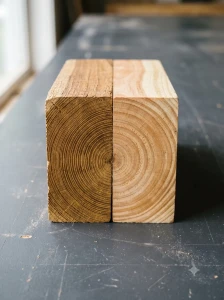
Why does kiln-drying matter more than the wood species?
Freshly felled wood contains up to fifty percent water by weight. If a carpenter builds a table using wet, air-dried wood, the timber will shrink, warp, and crack as it adapts to the air conditioning in your home or office. In India’s highly variable climate, where humidity swings from eighty percent in the monsoon to twenty percent in the dry season, proper seasoning is non-negotiable. Insist on wood that has been kiln-dried to a moisture content of eight to twelve percent. This kiln-drying process stabilizes the cellular structure of the timber, ensuring your custom dining table remains flat and stable for decades. Ask your maker to show you a moisture meter reading of the wood before they begin fabrication.
Are modern adhesives and finishes ruining your indoor air quality?
The environmental impact of a table does not end with the raw wood. Conventional furniture makers rely heavily on urea-formaldehyde glues to laminate panels and synthetic polyurethane or melamine spray finishes to seal the surface. These finishes off-gas harmful chemicals into your living spaces for years. To avoid this, specify that your fabricator use solvent-free, zero-VOC water-based adhesives. For the protective topcoat, opt for natural hardwax oils or traditional shellac, which is derived from natural resin. These finishes protect the wood while allowing it to breathe, and they can be easily spot-repaired without stripping the entire table down. If a scratch occurs on an oil-finished table, you can sand and re-oil that specific spot in ten minutes. If a polyurethane finish scratches, the entire table must be sent back to a factory to be chemically stripped and re-sprayed.
Designing for deconstruction and structural honesty
A sustainable table is designed with its eventual disassembly in mind. This is where the philosophy of our custom furniture design services comes into play. We look at furniture through the lens of architectural longevity, ensuring every piece can be repaired, flat-packed, or repurposed. Standard modern furniture is glued together permanently, meaning any major structural damage renders the entire piece useless.
Should you avoid metal legs on wooden table tops?
Combining raw steel legs with a heavy wooden slab is a popular design trend, but it often leads to premature structural failure if executed incorrectly. Wood is a living material that expands and contracts across its grain as humidity changes. Metal does not move. If you screw a rigid metal frame directly into the underside of a wide wooden top with standard screws, the wood will eventually split as it tries to move. A skilled maker will use slotted fastener holes, figure-eight connectors, or sliding dovetail joints. These specialized engineering details allow the wooden top to slide back and forth over the metal base without cracking. It is a simple detail, but it makes the difference between a table that lasts five years and one that lasts fifty.
Is traditional joinery superior to modern hardware?
Traditional Indian joinery, such as mortise-and-tenon or through-dovetails, relies on mechanical interlocking rather than chemical adhesives. These joints distribute weight and tension naturally through the wood fibers. While modern pocket-hole screws and biscuits are faster to assemble, they create localized stress points that can fail over time. Traditional joinery also allows the table to be disassembled without destroying the wood fibers, making future restoration or relocation simple. When reviewing options with your designer, prioritize mechanical joinery over screw-heavy construction. You can see examples of this structural philosophy in action across our sustainable residential portfolio.
A truly sustainable table does not rely on glue to stay together, nor does it rely on synthetic plastics to stay clean. It relies on precise joinery and natural oils that age gracefully over generations.
Investing in generational furniture
Choosing the right piece of furniture is a long-term commitment to our natural resources. When you decide to buy custom wooden tables, you are choosing to step away from the cycle of disposable, flat-pack consumerism. By demanding transparency regarding timber origins, moisture levels, joinery techniques, and finishing chemicals, you ensure your investment supports responsible forestry and skilled craftsmanship. At Thumbimpressions, we balance traditional woodworking wisdom with modern architectural precision to create pieces that respect both the material and the environment. Contact our design team today to discuss your next project and create a custom piece tailored to your space.
Craft a Generational Masterpiece
Ready to invest in structural honesty, non-toxic finishes, and legally sourced Indian timber? Partner with Thumbimpressions to design custom furniture that aligns with architectural precision and ecological responsibility.
Frequently asked questions
How do I verify if the wood used in my table is legally sourced in India?
To verify the legality of domestic timber, ask your fabricator for the transit pass issued by the State Forest Department. This document tracks the movement of timber from government-sanctioned auctions to the sawmill. For imported timbers, request the FSC (Forest Stewardship Council) chain-of-custody certificate. If a maker cannot provide any documentation, the timber is likely sourced from informal, unregulated logging networks. Using reclaimed wood from verified demolition sites is the most reliable way to guarantee zero new trees were felled.
Can I use reclaimed wood for an outdoor dining table?
Yes, but you must select the right species and construction methods. Reclaimed teak or shorea (sal wood) are excellent choices for outdoor use because of their high natural oil content and density. Outdoor furniture faces extreme climate cycles, so the joinery must allow for wood movement. Avoid large solid slabs outdoors as they warp quickly. Ensure the finish is a breathable, UV-resistant natural oil rather than a hard film-forming lacquer which will peel and crack under direct sunlight.
What is the difference between solid wood and engineered wood in terms of environmental impact?
Solid wood is a natural, biodegradable material that sequesters carbon for its entire lifespan. It can be sanded, repaired, and refinished multiple times. Engineered wood, such as MDF, plywood, or particle board, is made by bonding wood fibers or veneers with synthetic resins, often containing urea-formaldehyde. While engineered wood uses wood waste efficiently, it cannot be easily repaired once damaged by water or wear, leading to a much shorter lifespan. Synthetic binders also make engineered wood difficult to recycle safely, making solid timber the superior ecological choice.
How do I maintain a table finished with natural oils?
Maintaining an oil-finished table is straightforward but requires consistency. For daily cleaning, use a damp cloth with a mild, pH-neutral soap. Avoid harsh chemical cleaners or ammonia-based sprays, which strip the protective oil layer. Apply a fresh coat of maintenance oil once or twice a year to maintain water resistance. You can easily sand and re-oil localized scratches yourself without having to refinish the entire table surface.
Why does kiln-dried wood cost more, and is it worth the price?
Kiln-drying slowly extracts moisture from timber over several weeks in specialized ovens. While this increases the upfront cost compared to rushed air-drying, it is worth the investment. Unseasoned wood will inevitably warp, shrink, or split when placed in an air-conditioned or heated room, ruining the joinery and alignment of your table. Paying extra for seasoned timber is the only way to guarantee structural stability over its lifetime.